 Dota 2
Coaching / Replay Analysis
Dota 2
Coaching / Replay Analysis
Stop Blaming Your Team: How Replay Analysis Reveals Your Hidden Mistakes
Stop looking for scapegoats in your Dota 2 matches. Learn how objective replay analysis can uncover the mechanical and decision-making errors holding you back from climbing the MMR ladder.
The Psychology of the Blame Game

It is easy to point fingers at a support who missed a spell or a carry who farmed too slowly, but focusing on teammates is the fastest way to stagnate. In Dota 2, you are the only constant variable in your games, and your personal impact is the only thing you can truly control.
Shifting your mindset from 'my team failed' to 'what could I have done differently' is the first step toward genuine improvement. Replay analysis provides the objective evidence needed to break the cycle of frustration.
- Identify one specific loss where you felt frustrated.
- Commit to watching the replay without looking at your teammates' mistakes.
- Focus exclusively on your own positioning and resource management.
Setting Up Your Review Environment
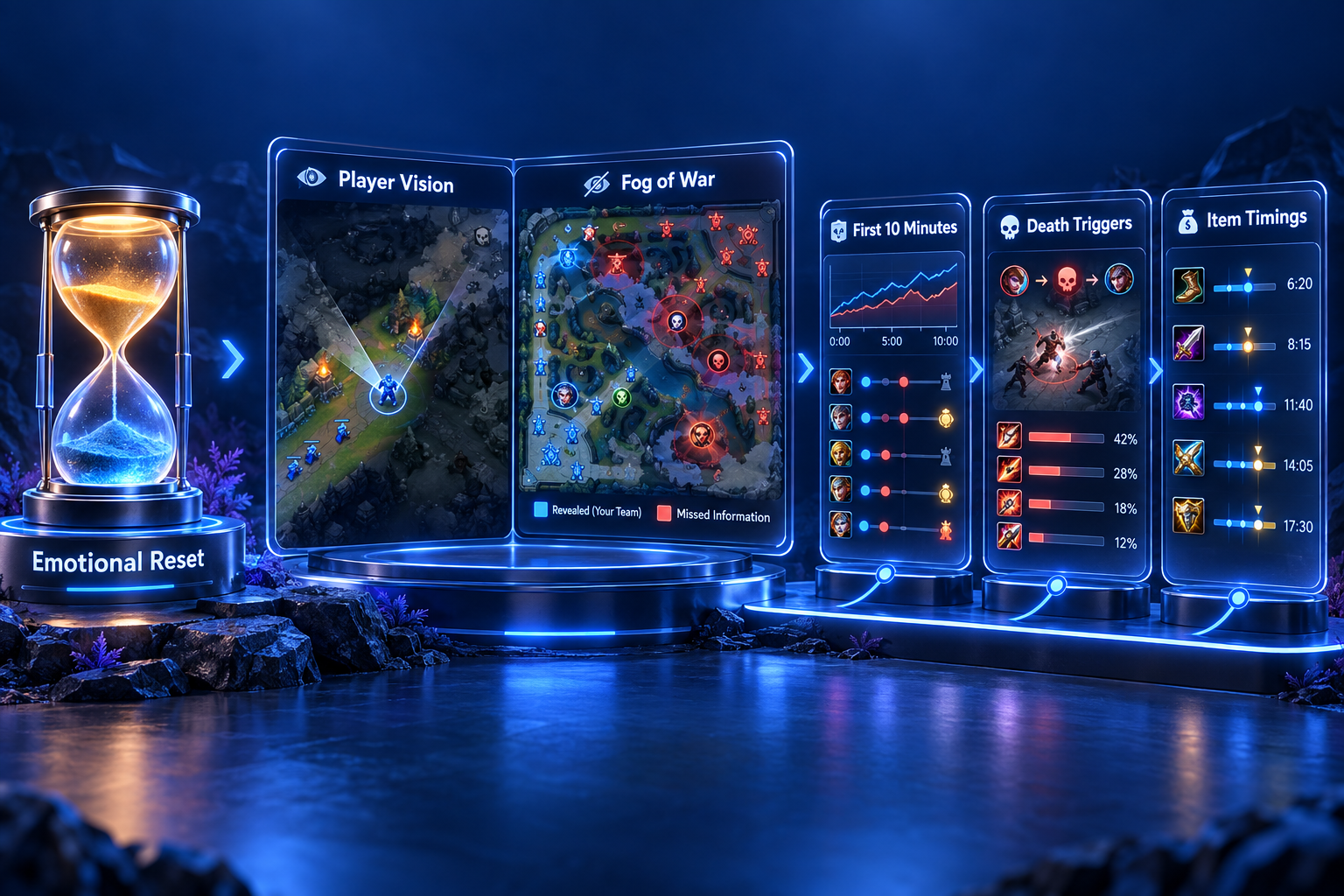
To get the most out of a replay, you need to watch it with a clear head. Avoid reviewing games immediately after a loss when emotions are high, as this often leads to biased interpretations.
Use the Dota 2 client's replay tools to toggle between 'Player Perspective' and 'Fog of War.' Seeing what you could have known versus what you actually saw is crucial for identifying missed information.
- Watch the first ten minutes to evaluate your laning efficiency.
- Note every time you died and identify the specific trigger.
- Check your item timings against your hero's power spikes.
Identifying Mechanical and Strategic Leaks
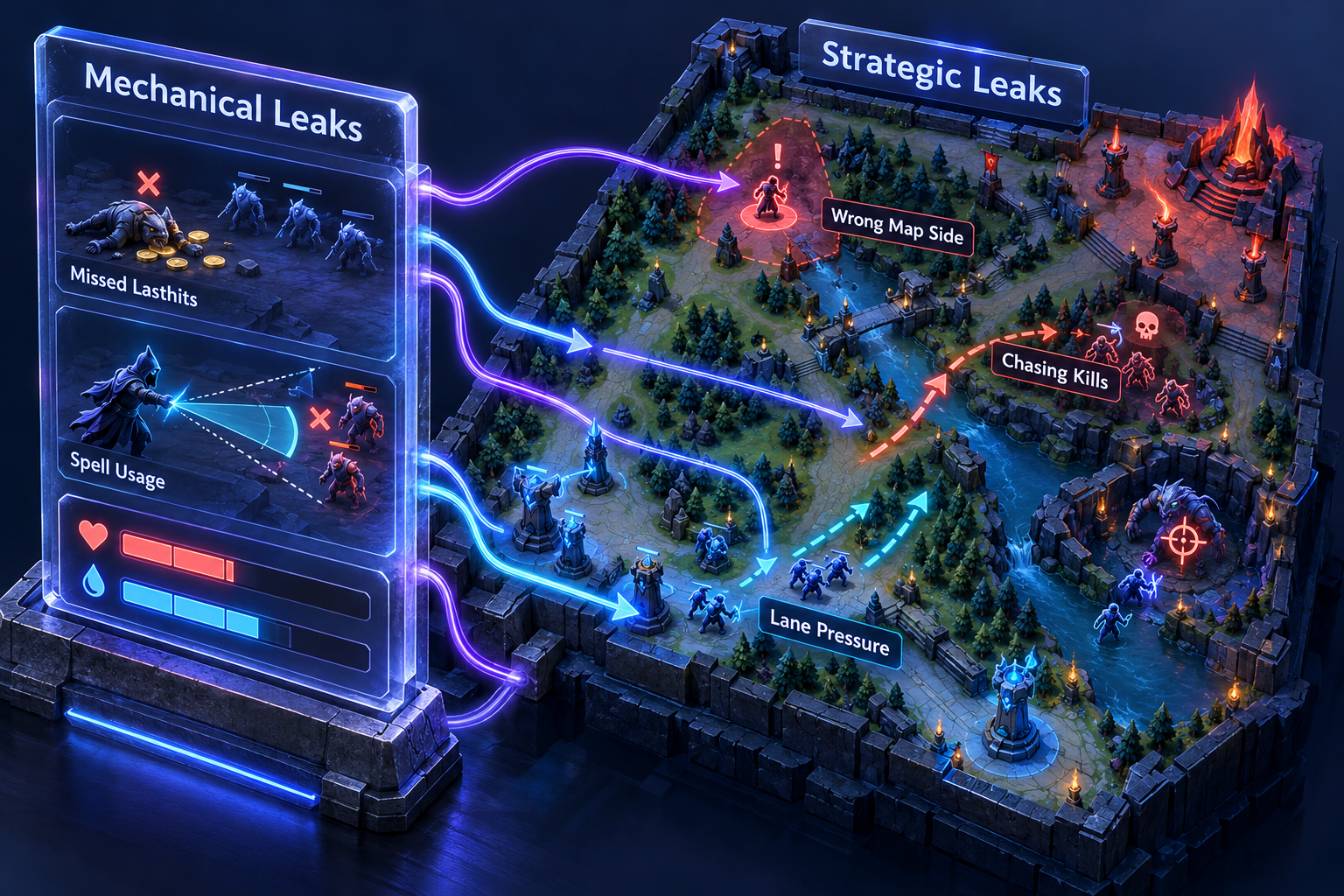
Mechanical errors, such as missed last hits or inefficient spell usage, are often obvious, but strategic leaks are more subtle. Look for moments where you were 'farming the wrong side of the map' or failing to show up to a crucial objective.
Ask yourself if your movements were proactive or reactive. If you spent the mid-game chasing kills rather than pushing lanes, you likely contributed to the map pressure deficit that led to the loss.
- Count your missed last hits in the first five minutes.
- Look for moments where you were out of position during a team fight.
- Evaluate if your item build was appropriate for the enemy lineup.
When to Seek Professional Guidance
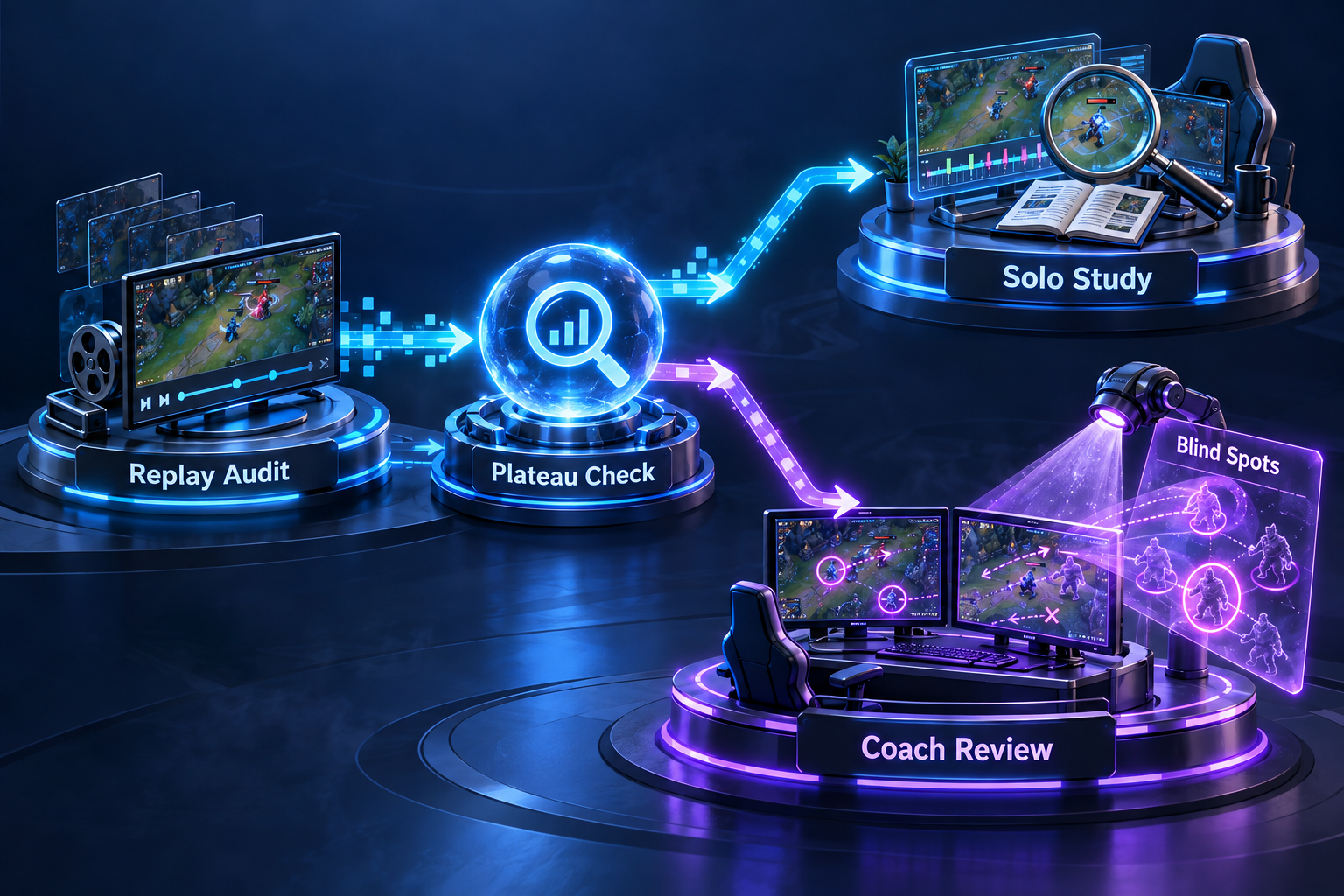
Self-analysis is a powerful tool, but it has limits. Sometimes, you may be blind to your own 'blind spots'—habitual mistakes that feel correct because you have been doing them for hundreds of hours.
If you find yourself stuck at a specific MMR plateau despite consistent practice, it may be time to consult a coach. A fresh pair of eyes can identify patterns in your play that you simply cannot see on your own.
- Continue independent study if you can clearly identify your own mistakes.
- Work with a coach if you feel stuck despite reviewing your own replays.
- Delegate repetitive tasks like replay logging if you lack the time to analyze every match.
Turning Insights Into Action

Analysis is useless without application. After identifying your top three mistakes, focus on fixing only one of them in your next five matches. Trying to change everything at once usually leads to poor performance.
Create a simple checklist to keep next to your monitor. By consciously focusing on one aspect of your game, you will eventually turn that correction into a subconscious habit.
- Pick one specific mechanical skill to improve this week.
- Record your progress in a simple spreadsheet or notebook.
- Review your performance on that specific skill after every session.
Ready to climb?
Master Your Hero with Expert Coaching
Stop guessing why you lost and start winning with a personalized coaching session tailored to your current MMR and hero pool.